
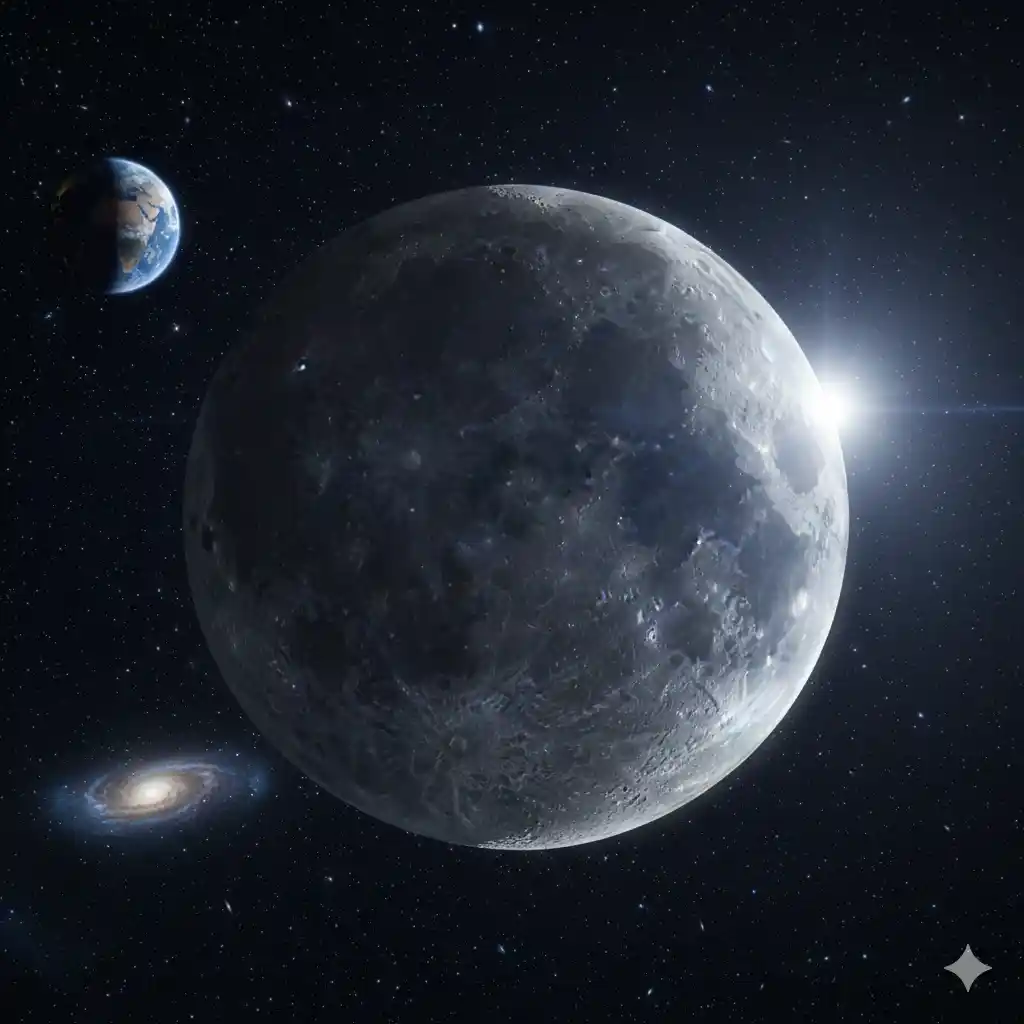
The phases of the Moon
Humanity has been captivated by the Moon for thousands of years. The phases of the Moon have been a source of inspiration for countless stories, provided navigational aid for ocean-going vessels, and provided a way to measure time down the ages. We can watch the Moon grow from a slimmer crescent to a shining ball in the sky.
With the Moon Phase Live Tracker, you can follow the Moon’s phases as they happen. This tool is especially beneficial for people who have an interest in astronomy as well as photography.
The Lunar Cycle
The Moon undergoes a phases cycle almost every 29.5 days, which involves the moon moving through new moon, waxing crescent, first quarter, waxing gibbous, full moon, waning gibbous, last quarter, and waning crescent.
Every lunar phase exhibits unique characteristics of beauty, utility and meaning. The new moon represents the darkness suitable for contemplation and watching the stars, while the full moon casts bright moonlight onto Earth's surface, enhancing the beauty of the landscape. The crescent and gibbous phases show various shapes and textures of the world’s famous satellite without being extreme.
Why Should I Track The Moon Phases?
Knowing which phase the moon is currently in is not just intriguing for dreamers and sky-watchers — it has practical value as well. For centuries, farmers and gardeners have been using the moon phases to help with their planting and harvesting. For photographers, knowing the moon phase can help to create great night pictures. Amateur astronomers also need to know the moon phase to observe its surface features, including craters and mountains.
With the Moon Phase Live Tracker, you get an instant, real-time view of the Moon’s current phase, along with upcoming phases, so you can plan your nights accordingly.
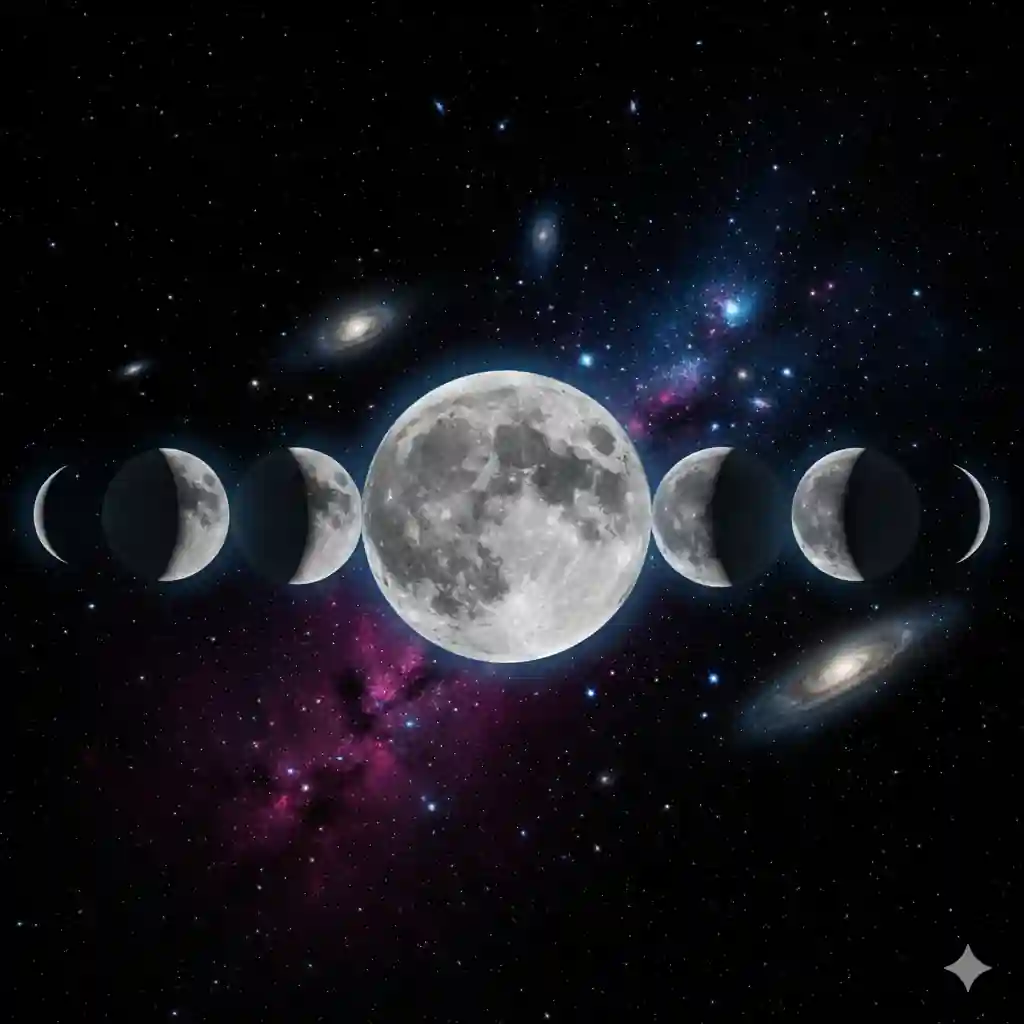
Experiencing the Moon in Real Time
Using the live tracker, you can see exactly how the Moon appears in the sky tonight. Is it a thin crescent low on the horizon? Or a glowing full moon rising high in the night? Our interactive display updates continuously, giving you a realistic view of the Moon’s phase, no matter where you are in the world.
For photographers, this is invaluable. The tracker allows you to plan shoots around the Moon’s brightness, angle, and position, capturing landscapes, cityscapes, or even dramatic lunar eclipses at their peak. For casual sky-watchers, it’s simply a way to connect with the sky and experience the beauty of the lunar cycle.
Watching the Moon's Rhythm
The Moon's tidal pull is well documented, but its nightly change is also simply satisfying to follow — a slow, visible rhythm in a world that mostly moves too fast to notice. From the dark stillness of a new moon to the full glow two weeks later, the cycle repeats with a regularity that's rare to see with the naked eye.
The live tracker makes that rhythm easy to follow. Check in as often as you like and watch the shape shift night by night, from a faint sliver to a complete, illuminated disk.
Tips for Using the Moon Phase Tracker
- Check the current phase before planning a night under the stars or a photography session.
- Use the tracker to anticipate full moons for bright night walks or creative projects.
- Plan stargazing sessions around the new moon when the sky is darkest.
- Share the tracker with friends and family to create shared experiences and connect over the wonder of the sky.
Every phase of the Moon offers a different experience, and the tracker ensures you never miss a moment.
Understanding the Moon Phases
Let’s break it down without the science headache:
🌑 New Moon
The Moon is between Earth and Sun; the illuminated side faces away, making it invisible to the naked eye and ideal for dark-sky stargazing.
🌒 Waxing Crescent / 🌓 First Quarter
A growing sliver transitions into a half-lit disk visible in the afternoon and evening sky.
🌔 Waxing Gibbous / 🌕 Full Moon
More than half illuminated, leading up to the Full Moon when the entire face is lit up by the Sun all night long.
🌖 Waning Gibbous / 🌗 Last Quarter / 🌘 Waning Crescent
The illumination decreases day by day as the Moon moves back toward the Sun, rising later in the night.
FAQ
The current moon phase is determined by the moon's specific position in its 29.5-day orbit around Earth. Our live tracker updates every minute to show you exactly which phase is visible in the sky right now, whether it is a sliver of a Crescent or a bright Full Moon.
To tell if the moon is waxing or waning, look at which side is illuminated. In the Northern Hemisphere, if the right side is bright, the moon is Waxing (growing toward Full). If the left side is bright, it is Waning (shrinking toward New). Our live tool automatically calculates this direction for you.
Moonrise and moonset times vary daily and depend on your specific geographic location. Generally, a New Moon rises and sets with the Sun, while a Full Moon rises at sunset and sets at sunrise. For the most accurate local times, we recommend checking a GPS-based stargazing app alongside our live phase tracker.
Our tracker uses a precise astronomical formula based on the Synodic Month (29.53058867 days). By calculating the time elapsed since a known New Moon reference point, we provide a real-time mathematical representation of the moon's current illumination with high accuracy.
Even if the moon is in a visible phase (like a Quarter or Gibbous), it may not be visible in your sky due to:
Daylight: The moon is often above the horizon during the day but washed out by sunlight.
Horizon Position: The moon may not have risen yet in your specific time zone.
Weather: Cloud cover is the most common reason for a "hidden" moon.
The New Moon occurs at the beginning of every lunar cycle when the moon is positioned between the Earth and the Sun. You can track the countdown to the next New Moon on our live display; as the "Waning Crescent" percentage hits zero, the new cycle begins.