
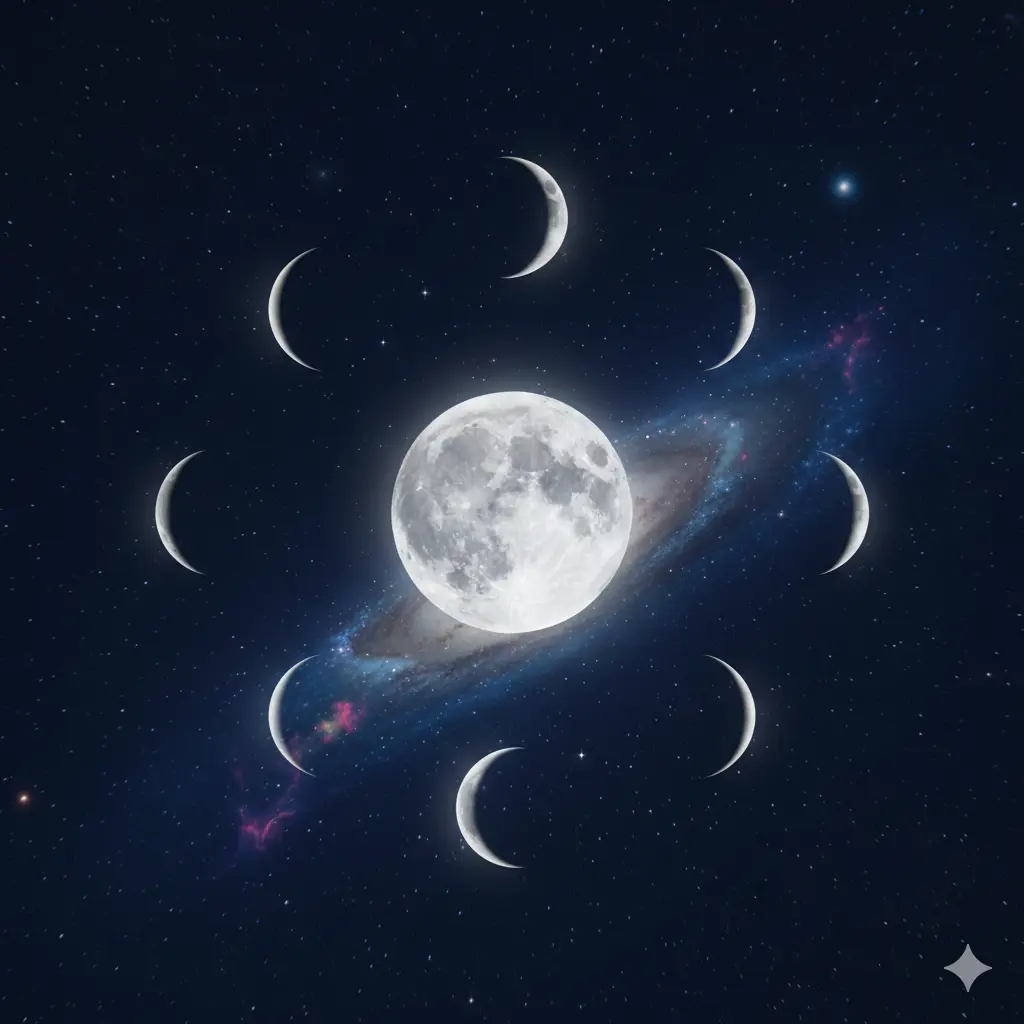
Get interactive!
Our Moon Phase Calendar is designed to make understanding the Moon effortless and fun. Each day, the calendar updates automatically, showing you the lunar phases, whether it’s a new moon, a first quarter, a waxing gibbous, or the awe-inspiring full moon. But this isn’t just a static display — it’s fully interactive, letting you click on any date to see detailed information about that day’s lunar phase.
Why Lunar Phases Matter
Understanding lunar phases isn’t just about pretty moon emojis or Instagram-worthy night sky photos. A new moon marks the start of the lunar month, a time often associated with fresh beginnings and planting intentions. The full moon, on the other hand, has been celebrated across cultures for centuries — from harvest festivals to mystical rituals, its glow has always inspired awe and creativity.
For photographers, knowing the exact lunar phase is crucial. Want to capture the Moon rising over a scenic landscape? Our calendar shows moonrise and moonset times for each day, helping you plan the perfect shot. Whether you’re chasing the elusive blue moon or the dramatic red glow of a lunar eclipse, accurate lunar data is essential.
How Our Interactive Lunar Calendar Works
At its core, our interactive lunar calendar calculates the Moon’s phase based on precise astronomical data. By tracking the days since a known new moon, it determines the current phase down to the hour. This means you always know if the Moon is waxing, waning, or perfectly full.
But the calendar doesn’t stop there. Click on any day, and you’ll see:
- Moon phase name (New Moon, First Quarter, Waxing Gibbous, etc.)
- Moon emoji for quick visual reference 🌑🌒🌓🌔🌕🌖🌗🌘
- Exact date
- Optional notes for special events like supermoons, micromoons, or eclipses
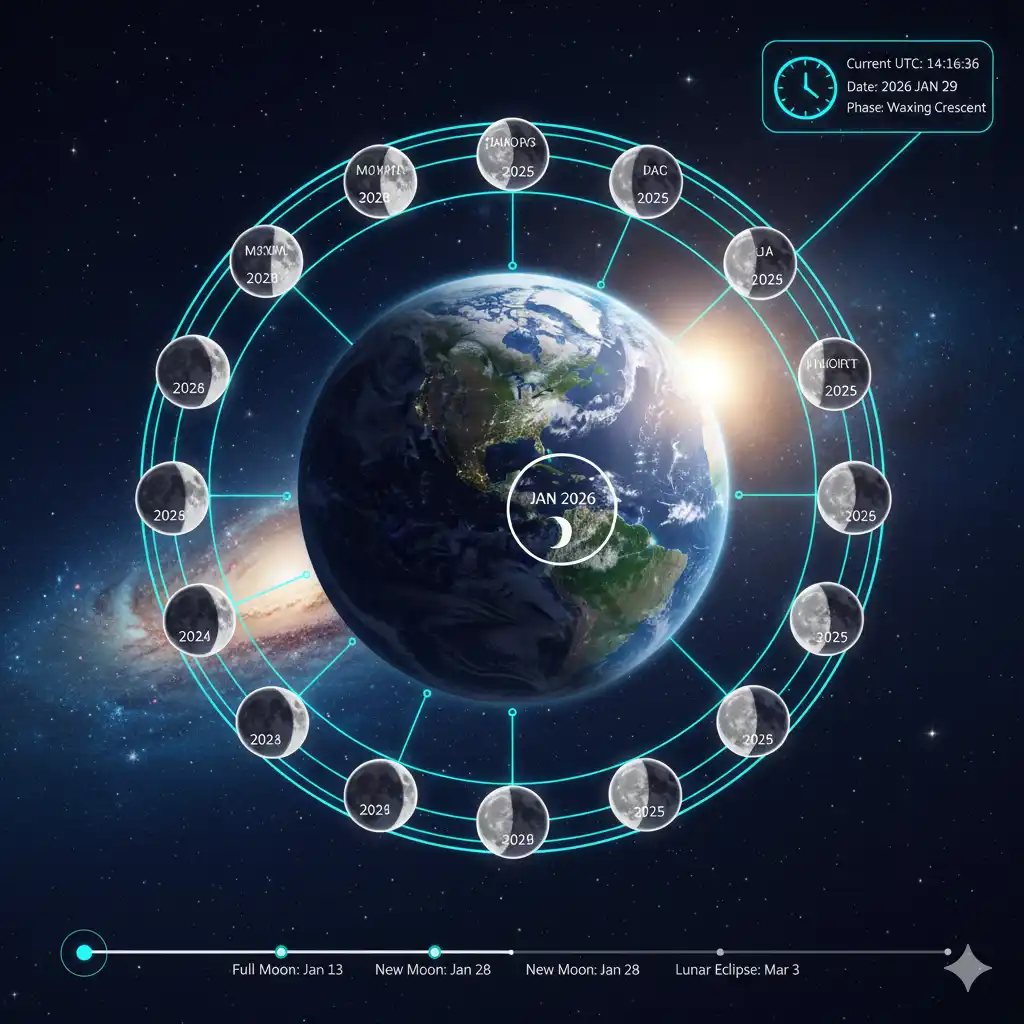
Moonrise and Moonset Times
A Moon Phase Calendar isn’t complete without moonrise and moonset times. Knowing when the Moon will appear on the horizon is key for any astronomer. Our calendar provides accurate times for your local area, ensuring you never miss a celestial event. Watch a waxing crescent rise over a quiet lake, or capture the full moon high in the night sky — the possibilities are endless.
The Moon’s position changes night by night, so having an interactive lunar calendar allows you to see the Moon’s journey across the sky. This is perfect for photographers, educators, and anyone who loves observing the night sky.
Connect with the Cosmos Every Day
There’s a reason humans have been fascinated with the Moon for millennia. It’s a constant in an ever-changing sky, a natural clock, and a source of inspiration. With our Moon Phase Calendar, you can connect with the cosmos every day. Track lunar phases, observe moonrise and moonset, and celebrate celestial events as they happen.
Moon FAQ
The current moon phase changes daily as the moon orbits the Earth. Our live tracker uses real-time astronomical data to calculate whether the moon is in its New Moon, Waxing, Full, or Waning stage. You can check the exact phase for today by looking at the highlighted date on our interactive calendar above.
A complete lunar cycle, also known as a synodic month, lasts approximately 29.53 days. During this period, the moon transitions through all eight primary phases: New Moon, Waxing Crescent, First Quarter, Waxing Gibbous, Full Moon, Waning Gibbous, Last Quarter, and Waning Crescent.
To find the date of the next Full Moon, simply navigate through our moon phase calendar using the “Next Month” buttons. The calendar display will show the 🌕 emoji on the specific date the moon reaches 100% illumination. Full moons are significant for stargazers, photographers, and various cultural traditions.
The terms Waxing and Waning describe whether the visible illuminated part of the moon is growing or shrinking:
Waxing: The moon is “increasing” in light, moving from a New Moon toward a Full Moon.
Waning: The moon is “decreasing” in light, moving from a Full Moon back toward a New Moon.
The moon changes phases because it orbits the Earth, and the Earth orbits the Sun. As the moon moves, the angle of sunlight hitting its surface changes from our perspective on Earth. We only see the portion of the moon that is currently being illuminated by the Sun.