
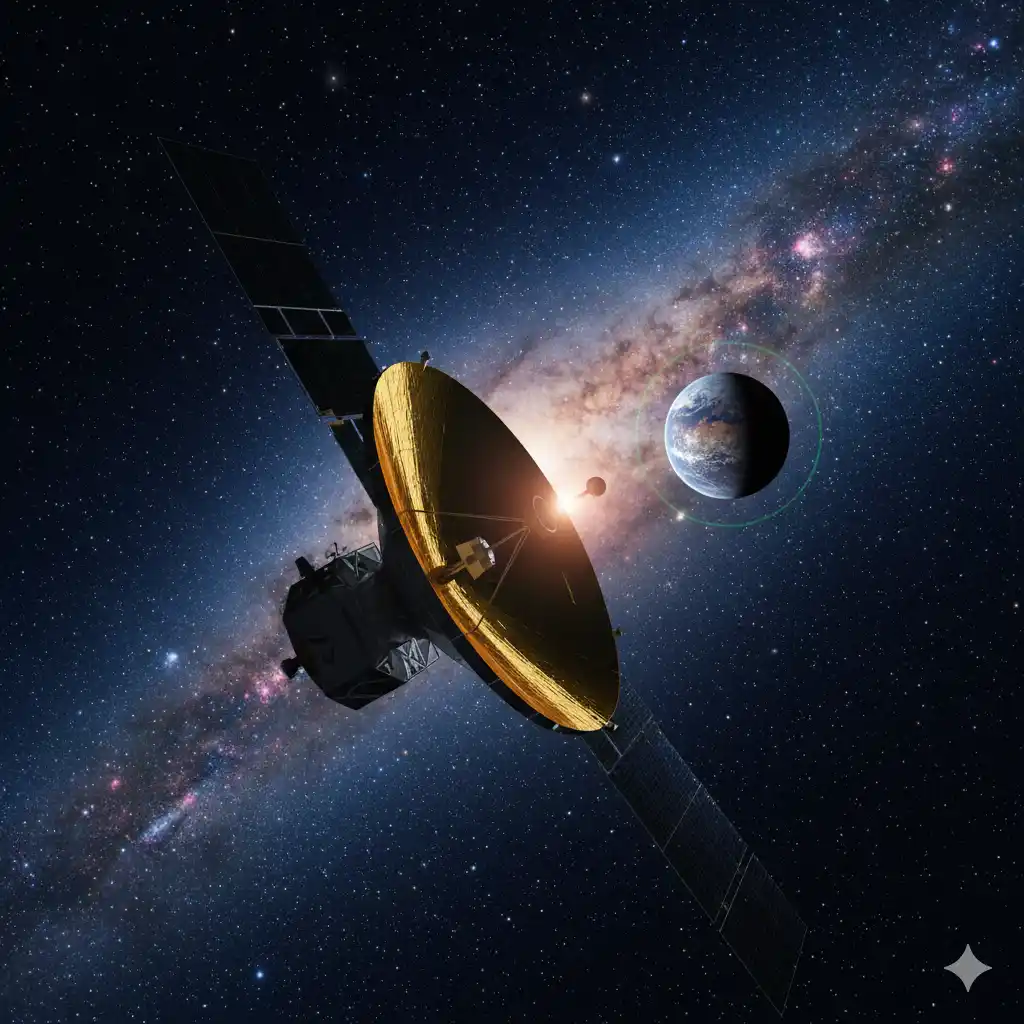
The Kepler Space Telescope revolutionized our understanding of the cosmos by discovering thousands of extrasolar planets. Though the mission has concluded, the data continues to fuel astrobiology research. This hub provides a streamlined interface to explore key Kepler discoveries and their potential for habitability.
Reference Data & External Links To support further research, we recommend the following primary archives:
- NASA Exoplanet Archive – Confirmed planet data.
- MAST Archive – Raw Kepler light curves and target pixel files.
- Exoplanet Exploration Program – NASA’s center for exoplanet science.
The Kepler Space Telescope, launched in 2009, fundamentally changed our understanding of the universe. By monitoring over 150,000 stars for periodic dips in brightness—a technique known as the Transit Method—Kepler proved that there are more planets than stars in our galaxy.
Even though the primary mission and its successor, K2, have concluded, the archival data remains a cornerstone for astrobiology and the search for a “Second Earth.”
Interactive Discovery Explorer
The tool below allows researchers and enthusiasts to filter through key Kepler discoveries. We focus on planetary candidates that reside within or near the Circumstellar Habitable Zone (the “Goldilocks Zone”), where conditions may allow for the existence of liquid water.
🔭 Kepler Mission Legacy Explorer
Official Mission Data & Candidate Analysis
| Kepler Designation | Dist (ly) | Star Type | Habitability |
|---|
Select a Kepler discovery from the map or table to begin analysis.
Methodology and Data Processing
The habitability scores (ESI) and temperature estimates in this catalog are derived from stellar flux calculations and planetary radius data. We utilize the Earth Similarity Index (ESI) as a multi-parameter characterization of exoplanets as a physical object, considering:
- Planetary Radius: Compared to Earth radii ($R_\oplus$).
- Effective Stellar Flux: The amount of energy the planet receives from its host star.
- Equilibrium Temperature: Estimated surface temperatures based on albedo and atmospheric assumptions.
Scientific Impact
Kepler’s greatest legacy is the statistical census of planets. We now know that small, rocky worlds are common, and approximately 20-50% of stars visible in the night sky are likely to have small, possibly rocky planets settled within their habitable zones. This data provides the foundational targets for follow-up observations by the James Webb Space Telescope (JWST) and future missions like ARIEL and PLATO.
Technical References
- Primary Data Source: NASA Exoplanet Archive (NExScI).
- Mission Profile: NASA Ames Research Center / Kepler Science Office.
- Catalog Version: Updated for 2026 archival standards.