Space Distance: How Far Is Everything in the Universe?
Share this page!
Space distance is one of the most fascinating aspects of astronomy. The universe is unimaginably vast, with celestial objects separated by mind-boggling distances. Even the planets in our own solar system are separated by millions of kilometers, while galaxies lie billions of light-years apart.
🌌 Cosmic Distance Navigator
UNIT: LIGHT YEARS & KILOMETERS
SCALING: LOGARITHMIC
Observable Universe
46.5 Billion Light Years
The limit of what we can see. Beyond this, light hasn’t had time to reach us since the Big Bang.
LEO (ISS)MoonMarsSunVoyager 1Proxima CentauriMilky WayAndromedaCosmic WebEdge
LIGHT TRAVEL TIME
13.8 Billion Years
OBJECT CATEGORY
Cosmic Horizon
Space Distance Between Earth, the Sun, and the Planets
These space distances give us perspective on the size and structure of the universe.
Our solar system is made up of the Sun, eight planets, dwarf planets, and many moons. Here’s a look at the average distances from Earth to the Sun and the other planets:
Distances in the Solar System
Object
Distance from Earth (km)
Distance from the Sun (km)
Sun
150,000,000 km (1 AU)
—
Mercury
91,000,000 km
58,000,000 km
Venus
42,000,000 km
108,000,000 km
Earth
—
150,000,000 km
Mars
78,000,000 km
228,000,000 km
Jupiter
628,000,000 km
778,000,000 km
Saturn
1,275,000,000 km
1,429,000,000 km
Uranus
2,724,000,000 km
2,871,000,000 km
Neptune
4,351,000,000 km
4,498,000,000 km
Pluto (dwarf planet)
5,000,000,000 km (approx.)
5,906,000,000 km
Note: Distances vary because planetary orbits are elliptical, not perfect circles.
Space Distance to the Nearest Stars
After our Sun, the nearest stars are still trillions of kilometers away. Here are the closest stellar neighbors to Earth:
Distances to the Nearest Stars
Star System
Distance from Earth (km)
Light Years
Proxima Centauri
40,208,000,000,000 km
4.24 light years
Alpha Centauri A/B
41,500,000,000,000 km
4.37 light years
Barnard’s Star
56,000,000,000,000 km
5.96 light years
Wolf 359
77,800,000,000,000 km
7.78 light years
Lalande 21185
81,600,000,000,000 km
8.29 light years
Galactic Space Distances: Milky Way and Beyond
When talking about space distance on a galactic scale, we start measuring in millions of light years.
Our Milky Way galaxy alone is enormous, and it’s just one of billions in the universe. Let’s look at distances on the galactic scale:
Distances Between Galaxies and Cosmic Landmarks
Object or Galaxy
Distance from Earth
Center of Milky Way
~27,000 light years
Andromeda Galaxy (M31)
2.5 million light years
Triangulum Galaxy (M33)
3 million light years
Messier 87 (Virgo Cluster)
53 million light years
Edge of Observable Universe
46.5 billion light years
1 light year ≈ 9.46 trillion kilometers.
Top 5 Most Mind-Blowing Space Distances
Here are five distances in space that highlight just how massive the cosmos truly is:
Earth to Sun – 150 million km: The baseline for measuring distances in the solar system.
Earth to Proxima Centauri – Over 40 trillion km: Our closest stellar neighbor.
Milky Way Diameter – About 100,000 light years: Just our galaxy alone is vast.
Earth to Andromeda Galaxy – 2.5 million light years: Our future galactic merger partner.
Observable Universe Radius – 46.5 billion light years: The farthest we can see.
Measuring Space Distances: Light Years, AU, and Parsecs
Because distances in space are so vast, astronomers use different units:
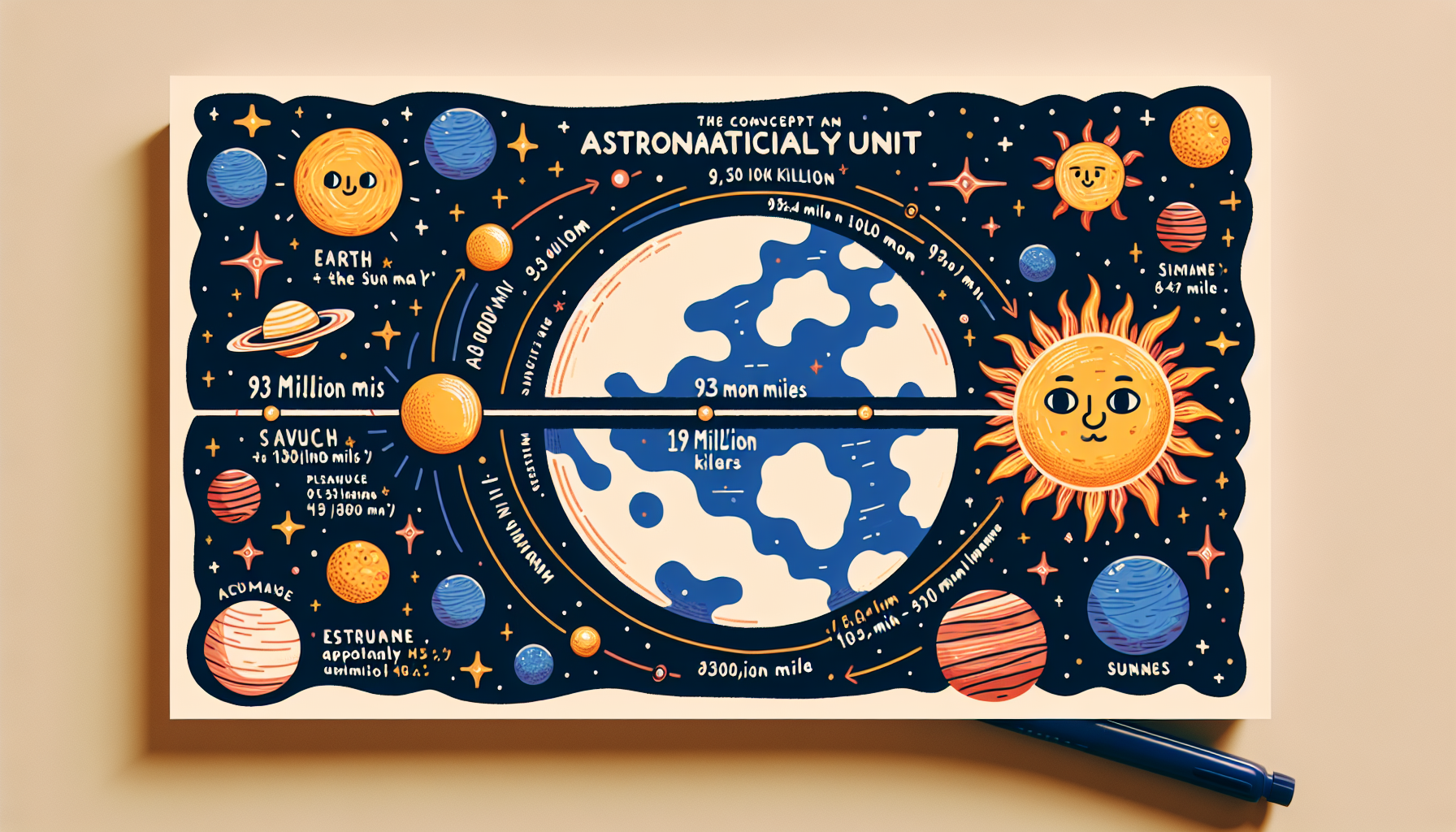
Astronomical Unit (AU): The distance from Earth to the Sun (~150 million km).
Light Year: The distance light travels in one year (~9.46 trillion km).
Parsec: Equals 3.26 light years (~30.9 trillion km).
Each unit helps express distance depending on the scale — planetary, stellar, or galactic.
Why Understanding Space Distances Matters
Knowing how far celestial objects are helps scientists:
Calculate travel times for probes and missions.
Understand the structure and scale of the universe.
Learn about the age and expansion of the cosmos.
For enthusiasts and educators, these numbers offer perspective — helping us grasp our place in space.
Space Is Bigger Than We Can Imagine
The distances in space defy everyday comprehension. From the 150 million kilometers to the Sun, to the 46 billion light years to the edge of the observable universe, every figure is a reminder of how truly vast the cosmos is. Whether you’re looking at planets or galaxies, space distance defines how we understand our place in the cosmos.